
Today’s Canadian Grocery Shopper: How Brands Can Adapt


Prior to Covid, household grocery shopping was primarily an in-person, flexible, and social weekly routine. It was defined by:
- Frequent trips: Households made multiple trips per week to the grocery store.
- Meal planning: Meal planning was often minimal or improvised, with shoppers walking down aisles to see what looked appealing or inspiration-buying on the spot.
- High impulse buying: As browsing was leisurely and unstructured, impulse purchases accounted for a large portion of the standard cart basket.
Today’s Canadian Grocery Sector
The cost-of-living crisis is unfolding at the retail level. For the 52-week period ending May 2026, dollar sales in Canada’s grocery stores increased 1.99%.[1] I would suggest negative – flat unit growth, given Canada’s monthly food inflation rate over the past year has exceeded 3%. Though the inflationary rate fell below the consumer price index in August 2026 for the first time in two years, RBC expects grocery prices to continue outpacing overall inflation in the near term.
The value of the Canadian dollar for food imports has fallen to its lowest point against the U.S. dollar this year @ $1.40 (September 20, 2026). South of the border, for the 5-month period ending June 2026, the US grocery sector experienced negative unit sales for five straight months.[2]
Canadian – US Trade Dispute
The breakdown in talks with the US has introduced a new line of tariffs. This time, they have begun farther up the food chain, with processors and manufacturers. Economists suggest Canada’s new measures will have a modest increase on food prices. Though the recent trade spat has revived the “Buy Canadian” movement, price trumps patriotism. When asked what would dis-influence a switch to a Canadian-made alternative, respondents ranked price at 67%.[3]
Today’s Canadian Grocery Shopper
In 2019, Canadians’ average annual household spending on food and non-alcoholic beverages was just under $7,400,[4] and in 2016, food accounted for approximately 10% of Canadians’ take-home income.[5] As a result of the food inflationary wars:
- Food now accounts for 22% of consumers’ take-home pay. [6]
- The average Canadian household is spending $180 more per month on food and beverage items than in 2019.
- Food bank visits have risen more than 99% between 2019 and 2025.[7]
Today, consumers are making more deliberate purchasing decisions, with brand loyalty remaining fragile. As a result, Canadians’ shopping habits today are being defined by:
- Shift to discount retailers: Dollar store visits have risen 7% over the past year, while annual spending has increased 8%.[8]
- More Frequent Trips, Smaller Baskets: During the 13 weeks ending in early April 2026, Canadians made five trips per week, while average basket size fell 3.4%.[9]
- Advanced Meal Planning: 46% prepare a shopping list in advance[10]
- Fewer Impulse Purchases: 56% of Canadians are concentrating their spending on essentials, and 51% say they are pulling back on non-essentials.[11]
- The adoption of AI: 39% of Canadians use generative AI tools to support purchasing decisions, with 28% specifically relying on AI-powered tools to track discounts, compare offers, and identify the best prices.[12]
How Brands Can Respond to Canadians’ Grocery Shopping Habits
The current state of the Canadian grocery sector has put brands in a difficult position. Food prices remain expensive for households, and consumers continue to actively manage their spending. Today, consumers’ spending is being influenced by the following 5 factors that brands must address:
- Product Solutions: As consumers increasingly turn to food to support their health goals, product benefits are becoming more important than brand identity.
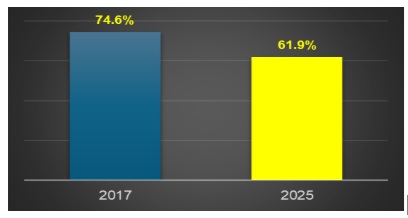
- Planned Promotions: Consumers have become increasingly skeptical of promotional pricing, leading to a growing belief that regular prices were artificially inflated beforehand. Promotions in the US grocery sector have become less effective in driving incremental volume, as outlined in Appendix 1.
- Scanning of a QR code: Half of Gen Z and Millennials scan QR codes weekly to check on ingredients / nutrition facts / sourcing details.[13] In most instances, if there is no QR code, the product is put back on the shelf.
- AI Searches: More than one-third (36%) of respondents say AI has replaced traditional search engines for at least some shopping activities, and 29% use AI to discover new brands.[14] Loblaws has mandated that all products must be AI discoverable.
- The Yuka Food Ingredient Scanning App: 70% of shoppers will not buy a product with a score below 51.[15]
Underdeveloped Categories in the Canadian Grocery Sector
I believe these four categories are underdeveloped in Canada’s grocery sector:
- Sustainable-based Products: In 2025, the sustainable-based dollar share in the US CPG sector was 25.4%, and their 5-year CAGR was +10.9% vs.+2.2% for conventional products,.[16] with 95% of consumers trying to take some action to live sustainably.[17]
- Functional Foods and Beverages: The global functional food and beverage market was valued at $398.8 B USD in 2025 and is projected to grow from $437.6 B USD in 2026 to $983.1 B USD by 2034, growing at a CAGR of 10.6% over the forecast period of 2026-2034.[18]
- Up-Cycled Ingredients: The global upcycled food products market was valued at $41.7B USD in 2025 and is projected to grow from $44.7B USD in 2026 to $79.5 B USD by 2034, exhibiting a CAGR of 7.47% during the forecast period.[19]
- GLP-1 Household: Nielsen IQ estimates 18% of Canadian households have at least one GLP-1 user. In the US, the share of households with at least one GLP-1 user has doubled to 22% since being introduced in 2023, while their grocery spending has declined 4%.[20]
Food Distribution Guy’s Final Thoughts
These are unprecedented times in the Canadian grocery sector, with escalating food prices showing no signs of slowing down in the immediate future. In the event of price increases due to the recently introduced new tariffs and the continued weakness of the Canadian dollar, communicate changes transparently by explaining the specific factors behind rising costs while continuing to highlight the value the brand provides. Consumers will blame the food industry, not Canada’s trade policies. “Fewer, better launches outperform high volumes of mediocre innovation.” “Loblaws seeks products that solve a real consumer need.” (Loblaws Supplier Summit, June 2026). Accordingly, brands should introduce products that address the above listed sectors. I leave you with four words that will define a brand’s future success:
Innovation! Value! Transparency! Trust!
If your food or beverage brand is ready to meet today’s Canadian grocery shopper with all four, I’d love to help. Contact Food Distribution Guy to talk about getting your products onto Canadian grocery shelves, and keeping them there.
Appendix 1
Promotional Grocery Unit Lift – US
References:
1. May Retail Sales Growth Masks Continued Weakness in Discretionary Categories, www.retail-insider.com, August 2026
2. Grocery Volumes Contract for Fifth Consecutive Month, www.grocerydive.com. July 2026
3. Price Trumps Patriotism for Canadians at the Grocery Store, www.canadiangrocer.com, 2026
4. RBC Says Grocery Prices Likely to Keep Rising Faster than Overall Inflation in the Near Term, www.retail-insider.com, September 2026
5. Food Now Accounts for 22% of Canadians Take-Home Pay, Dr. S. Charlebois, Grocery Business, July / August 2026
6. Food Now Accounts for 22% of Canadians Take-Home Pay, Dr. S. Charlebois, Grocery Business, July / August 2026
7. RBC Says Grocery Prices Likely to Keep Rising Faster than Overall Inflation in the Near Term, www.retail-insider.com, September 2026
8. Dollar Stores Cash in on Value, Mike Ljubicic, Grocery Business, July / August 2026
9. How Canadian Grocery Habits are Shifting: More Trips, Smaller Baskets, www.canadiangrocer.com, August 2026
10. The Canadian Grocery Sector, Winning the Intentional Consumer, Nielsen IQ, 2026
11. Canadian Retailers Enter Holiday Season 2026 with Spending Momentum and Price-Sensitive Shoppers, www.retail-insider.com, September 2026
12. AI is Becoming a Factor in Purchase Decisions, www.newswire.ca, June 2026
13. QR Code Statistics 2026, www.wavecnct.com, 2026
14. How AI is Taking a More Influential Role in Shopping, www.chainstorage.com, 2026
15. Snacking om Autopilot? Not Anymore, Nielsen IQ. 2026
16. Sustainability in the CPG Industry, Circana, April 2026
17. Key Grocery Trends for 2025, Nielsen IQ, January 2025
18. Functional Foods and Beverages Market Size, www.fortunebusinessinsighs.com, 2026
19. Upcycled Foods Products Market Size: www.fortunebusinessinsights.com, 2026
20. GLP-1 Users Grocery Spending is Dropping, www.grocerydive.com, August 2026
21. Grocery Unit Lift, Chris Costagli, Nielsen IO, 2026